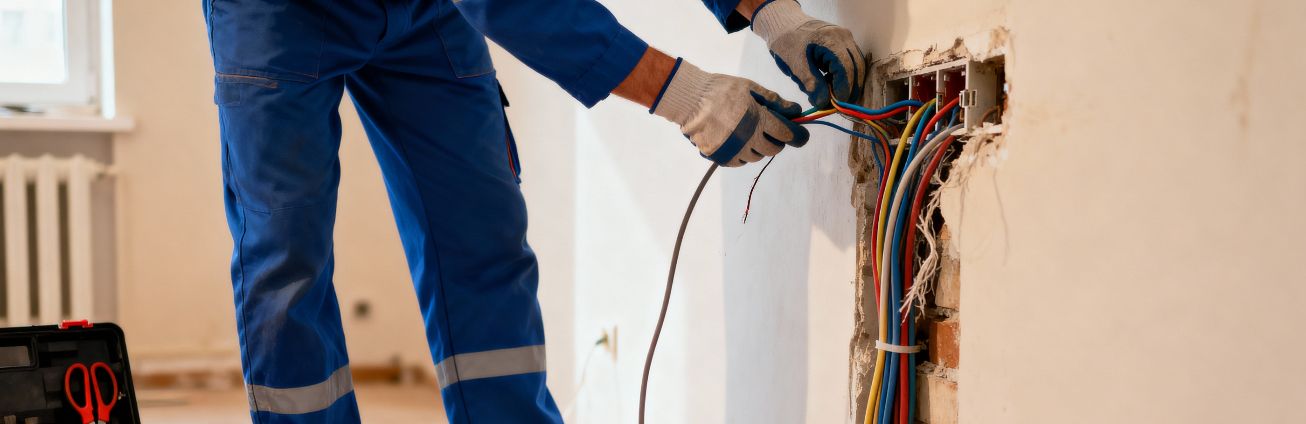
Knob and tube wiring is one of the oldest electrical systems still found in homes across Toronto, particularly in houses built before the 1950s. While it was considered safe and effective at the time of installation, today it poses serious safety concerns, especially fire hazards.
If your home still contains knob and tube wiring, understanding the risks and knowing how to prevent electrical fires is crucial for keeping your property and family safe. This article explains why knob and tube wiring is dangerous, the warning signs to watch for, and the best ways to reduce fire risks.
Knob and tube (K&T) wiring is an early electrical system made up of ceramic knobs, tubes, and copper conductors that run through open air and wall cavities. Unlike modern wiring, it lacks grounding and insulation, and the materials degrade with age.
Although it may still function in some homes, its design does not meet modern safety standards or support today’s electrical loads.
K&T wiring has no ground wire. Without grounding, stray electrical currents cannot safely dissipate. This increases the risk of short circuits, electrical shocks, and fire.
Over time, the original rubber and cloth insulation becomes brittle, cracked, or separated from the conductor. When wires are exposed, the risk of arcing and electrical ignition rises significantly.
Homes today require far more power than when knob and tube wiring was installed. High-demand appliances, heating systems, and electronics overload the circuits, causing wires to heat up beyond safe levels.
Overheating is one of the most common causes of electrical fires in older wiring systems.
Many homeowners unknowingly connect modern wiring to old knob and tube circuits. These improper connections, often done without permits or inspection, create severe fire hazards.
It’s also common to find buried junctions or spliced wires hidden in walls, which were never intended for this type of system.
Knob and tube wiring was designed to operate in open air, allowing heat to dissipate. When insulation is added around it—such as during attic upgrades—heat can no longer escape.
This trapped heat can easily lead to ignition and fire.
Exposed wiring is vulnerable to rodents, moisture, and physical damage. Chewed or severed wires spark and arc, which is a leading cause of electrical fires in older homes.
Homeowners should watch for:
Any of these signs mean the wiring requires immediate professional inspection.
The first and most important step is having a licensed electrician assess the condition of your wiring. A thorough evaluation will identify hidden issues, overloaded circuits, and unsafe modifications.
Murtex Electric can provide a full inspection and reduce risks before problems occur.
Plugging space heaters, air conditioners, microwaves, or power tools into knob and tube circuits dramatically increases the risk of overheating.
If you must continue using these appliances, they should be moved to circuits with modern wiring.
If your attic or walls have insulation covering knob and tube wiring, it must be removed. Electrical code prohibits insulating around K&T because it traps heat and increases fire risk.
Never connect modern wiring, outlets, or fixtures to an existing knob and tube circuit. Only a licensed electrician should work on or near these systems.
While some homeowners choose temporary solutions, the only long-term way to eliminate fire risks is to replace knob and tube wiring entirely.
Rewiring:
Many insurance companies in Ontario will not cover homes without removing or replacing K&T wiring.
Professional rewiring ensures safe removal, proper upgrades, and ESA inspection. A licensed electrician will also minimize disruption to your home and preserve historical features when working in older properties.
Knob and tube wiring may be a piece of your home’s history, but it is not compatible with modern living or modern safety standards. With increased fire hazards, aging materials, and overloaded circuits, the safest choice for homeowners is to replace the system entirely.
Murtex Electric specializes in knob and tube rewiring in Toronto, offering safe, clean, and code-compliant upgrades for older homes. If you suspect your home still contains this outdated wiring, we can inspect, advise, and rewire your home to meet current standards.
To schedule an inspection or get a rewiring quote, contact Murtex Electric today.