If you have ever looked at your electrical panel and found a row of small glass or porcelain screw-in fuses instead of switches, you have a fuse box. Depending on its age, condition, and your home's electrical needs, it may be time to consider an upgrade.
Understanding the difference between a fuse box and a circuit breaker panel can help homeowners make informed decisions about electrical safety, insurance requirements, and future upgrades.
A fuse box protects your home's electrical circuits by using a thin metal element inside each fuse.
When a circuit becomes overloaded or experiences a fault, the metal element melts, breaking the circuit and stopping the flow of electricity. This prevents wiring from overheating and helps reduce the risk of electrical fires.
While fuse boxes can provide effective protection, there is one significant drawback: once a fuse blows, it must be replaced.
Historically, some homeowners would install larger fuses to avoid repeated replacements. Unfortunately, this removes the circuit's intended protection and can create serious fire hazards by allowing wiring to carry more current than it was designed for.
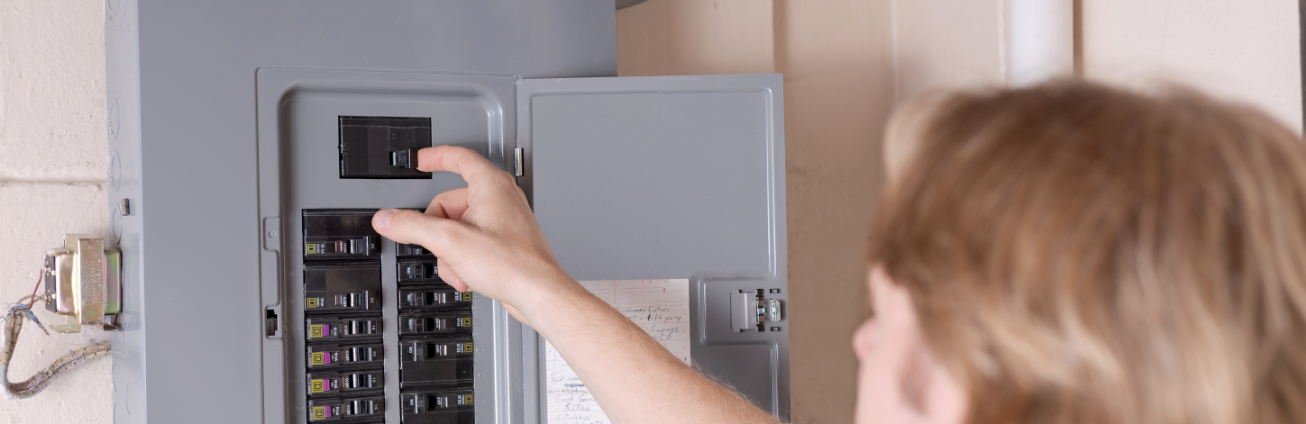
A circuit breaker panel performs the same basic safety function but uses resettable breakers instead of replaceable fuses.
When a circuit becomes overloaded, the breaker automatically trips and moves to an off position. Once the issue is resolved, the breaker can simply be reset.
Modern breaker panels also offer enhanced protection options that are unavailable in traditional fuse boxes.
Arc Fault Circuit Interrupters detect dangerous electrical arcing that standard breakers may miss. These faults are one of the leading causes of residential electrical fires.
Ground Fault Circuit Interrupters protect against electric shock in areas where moisture is present, including kitchens, bathrooms, garages, and outdoor spaces.
Both AFCI and GFCI protection are required under current Ontario Electrical Safety Code for many new installations and renovations.
Most fuse boxes were installed when homes had far fewer electrical demands than they do today.
A typical home built in the 1950s or 1960s may have operated comfortably on a 60-amp electrical service with only a handful of circuits. Today's homes often require significantly more power to support:
Many older fuse box systems simply were not designed to support these increased electrical loads.
Insurance companies often view fuse boxes differently than modern breaker panels.
Some Ontario insurance providers may charge higher premiums, request additional inspections, or require electrical upgrades before offering coverage.
If your home still has a fuse box, it is worth discussing the situation with your insurance provider to understand any potential impacts on coverage or rates.
Upgrading from a fuse box to a circuit breaker panel is often recommended when:
Major renovations typically require new circuits and additional electrical capacity.
Installing an EV charger, hot tub, generator, heat pump, or other large electrical load often requires a panel upgrade.
Repeated blown fuses may indicate that your electrical system is struggling to meet your household's demands.
Some insurance providers specifically request fuse box replacements before providing or renewing coverage.
A modern electrical panel can make a property more attractive to buyers and help avoid complications during the sale process.
A panel upgrade involves more than simply swapping out the old fuse box.
The process may include:
The exact scope depends on the home's existing electrical system and future power requirements.
Not every breaker panel is automatically safe simply because it uses breakers instead of fuses.
Certain older panel brands manufactured between the 1960s and 1980s have documented safety concerns related to breakers that may fail to trip during fault conditions.
If your home contains an older panel and you are unsure of its condition, having it evaluated by a licensed electrician is a smart precaution.
Fuse boxes are not illegal, and a properly maintained fuse box is not necessarily an immediate safety hazard.
However, for many GTA homeowners, upgrading to a modern circuit breaker panel improves electrical safety, simplifies insurance requirements, and provides the capacity needed for modern living.
If your home still relies on a fuse box, a professional assessment can help determine whether an upgrade makes sense for your property.
Murtex Electric provides fuse box replacements, electrical panel upgrades, and electrical inspections throughout Toronto, Etobicoke, Vaughan, Mississauga, Burlington, Oakville, Caledon, and surrounding GTA communities.
If you are unsure about the condition of your electrical panel or want expert advice on upgrading your system, contact Murtex Electric for a professional assessment.